
In the world of advanced manufacturing, 5-axis CNC machines represent the pinnacle of precision, efficiency, and capability. If you're machining complex parts for industries like aerospace, automotive, or medical, understanding this technology is crucial. This buyer's guide will walk you through the essentials to help you make an informed investment.
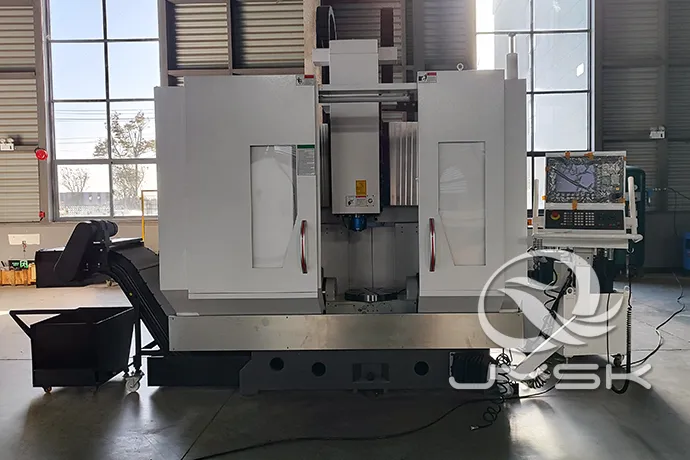
What is 5-Axis Machining?
Traditional 3-axis machines (X, Y, Z) move the cutting tool in three linear directions. A 5-axis CNC machine adds two rotational axes (A and B, typically), allowing the cutting tool to approach the workpiece from virtually any direction. This enables the creation of highly complex geometries in a single setup.
Key Benefits of Investing in a 5-Axis Machine
Why should your shop upgrade to a 5-axis system? The advantages are transformative:
Single-Setup Machining: Complete complex parts in one fixture. This eliminates errors between setups, improves accuracy, and drastically reduces lead times.
Superior Surface Finish: The ability to maintain optimal tool orientation and use shorter cutters reduces vibration and allows for better surface finishes, often eliminating the need for secondary finishing.
Ability to Machine Complex Parts: Unlock the potential to produce intricate components that are impossible with 3-axis machining, such as impellers, turbine blades, and sophisticated molds.
Increased Productivity & Efficiency: Faster machining times and reduced manual handling lead to a significant boost in overall equipment effectiveness (OEE) and profitability.
How to Choose the Right 5-Axis CNC Machine
Not all 5-axis machines are created equal. Here are the critical factors to consider:
1. Identify Your Primary Applications
Are you working primarily with aerospace aluminum, titanium alloys, or hardened steel? The required rigidity, spindle power, and torque will vary. For high-speed detailing, a machine like our VMC 5-Axis Series is ideal, while for heavy-duty milling, our Gantry 5-Axis Machines offer unmatched stability.
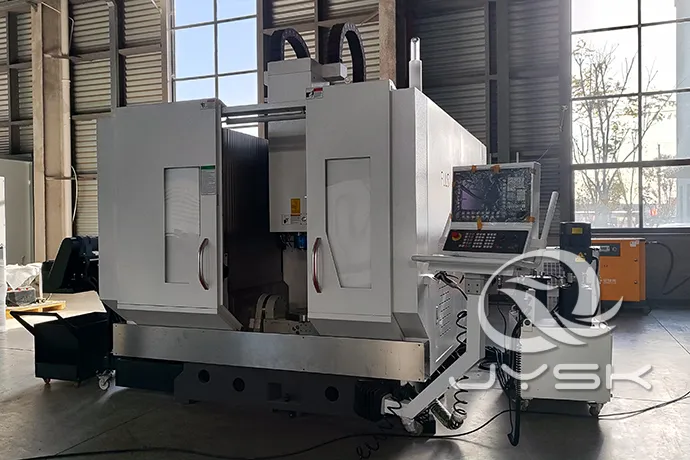
2. Understand the Table-Head vs. Table-Table Configuration
Table-Head/Trunnion: The rotary axes are in the table, which is excellent for machining smaller, heavier parts.
Head-Head: The rotary axes are in the spindle head, suitable for very large parts.
Our product experts can help you determine which configuration best suits your workpiece size and weight requirements.
3. Evaluate Critical Specifications
Travels and Work Envelope: Ensure the machine can accommodate your largest parts.
Spindle Speed and Power: Match this to your typical materials and cutting tools.
Control System: A user-friendly and powerful CNC control, like Siemens or Heidenhain, is vital for leveraging the full potential of 5-axis simultaneous movement.
4. Consider Automation and Future-Proofing
To maximize uptime, consider machines with integrated pallet changers or compatibility with robotic loading systems. This is key for building a lights-out manufacturing cell.
Ready to Revolutionize Your Manufacturing?
Choosing the right 5-axis CNC machine is a significant step toward dominating your market. At [Your Company Name], we don't just sell machines; we provide manufacturing solutions.
Explore our range of high-performance 5-axis CNC machines and find the perfect model for your application. [Contact our technical team today] for a personalized consultation and quote.